

In Paenga whāwhā (April) last year Literacy Aotearoa Christchurch started a contract with the Ministry for Pacific Peoples to deliver their Tupu Aotearoa programme in Christchurch.
Tupu Aotearoa is a programme that helps Pacific people aged 15 years and older access work or learning opportunities. There are 28 Tupu Aotearoa programmes delivered by community providers
throughout the motu.
By the end of their first year of delivery Literacy Aotearoa Christchurch had helped more than 100 Pacific people living in Christchurch into employment and further education. All of them when they signed up were NEET – not in Employment, Education or Training.
Manogi Tavelia, the Priorities Engagement Facilitator/Tupu Aotearoa Project Manager says that Tupu Aotearoa is an excellent fit with the ACE programmes now offered by Literacy Aotearoa.
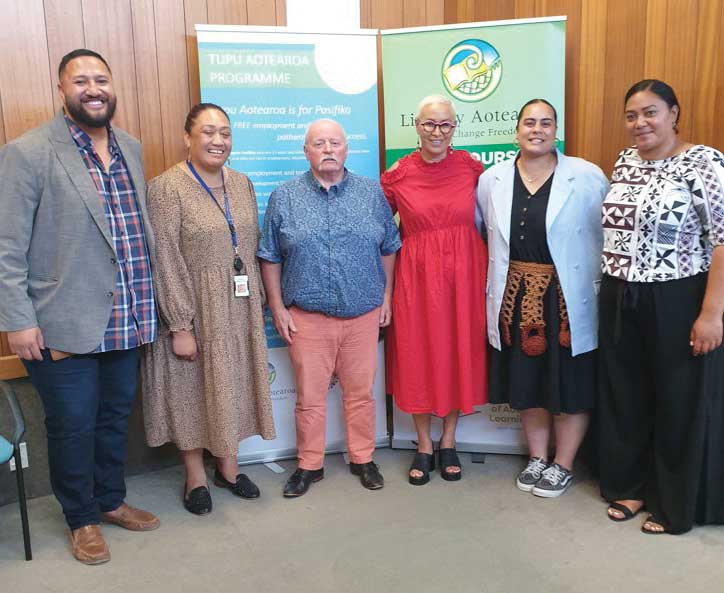 “We rejuvenated our ACE programmes last year as a way of meeting more of the needs of our learners. We offer a variety of programmes including driver licence, computer and digital literacy programmes, financial literacy, and job ready programmes. These ACE programmes are flexible and can be adapted so that they support the goals identified by our learners.
“The take-up of Tupu Aotearoa has been very good, and I think that’s because Aisi Tanielu-Loua, who is the Navigator for the programme, has a lot of contacts in the Pasifika community, and information about the value of the programme is really getting around.
“We work in client-focused ways. Under our contract with MPP if the person has a Level 2 qualification they don’t need to be placed into a literacy and numeracy programme. However, we always assess their level of literacy and numeracy because we realise that while someone might have Level 2, they may have a goal of getting a Level 4 qualification and may need literacy and numeracy support. About 20 percent of those engaged have gone into a literacy and numeracy programme.”
Mark Doyle, the Cluster Manager of five Literacy Aotearoa sites (plus two satellites) in Te Waka a Māui, says that another of the strengths that Literacy Aotearoa staff bring to the Tupu Aotearoa programme is the fact that they are well connected to other education providers and they have excellent local Pasifika networks.
“When we are pathwaying people into education we know what’s available. We have good contacts with people at Ara, universities and other training providers, so we can help our learners get into the right course. It also helps with our ongoing pastoral support which we provide while the client is in the course. For employment we provide pastoral support for 6 to 12 months post placement in employment. We make sure that no one slips out of their course or employment because they are not looked after.
“Our Tupu Aotearoa Navigator, Aisi Tanielu-Loua, is Samoan and has huge networks. We also have a Tongan navigator, one of our tutors is Cook Island, so we are building our capability across the Pasifika community.”
Aisi has already held three provider hui, bringing together all the local organisations working with Pasifika – not just education, but health, language, housing and culture. “Everyone understands the importance of helping Pasifika people into employment and further education,” says Mark, “so they are keen to work with us. It is fantastic to have everyone in same room, with the same kaupapa – looking for ways to collaborate and to support Pasifika.”
When she started Aisi visited every Pacific community provider in the city and invited them to a fono. She had about 25 organisations to reach. That included someone from both the universities and the polytechnic as well as MSD and the Ministry of Education.
“They loved it.” she says. “We started with whanaungatanga, and they loved the opportunity to share with others what they do, what they offer and how they can collaborate. They may have someone who needs help with their health goals, or getting a first home, or who needs a driver licence, or financial literacy support. The fono connected them to the services, programmes and courses in the wider Pacific community. They could now confidently refer someone on. I had people say to me that this kind of fono was well overdue.”
Initially most of those coming into the Tupu programme were women between the ages of 25-35, who were trying to re-enter the workforce, and often wanting to get a better job than they had previously. At the end of last year Literacy Aotearoa Christchurch had a lot of school-leaver referrals. These young people, says Aisi, “were wanting to go into further education but need a little more support in finding the right direction. Some needed basic skills and more confidence before they can even start thinking of work.”
 Malua Levi is one of the tutors. “Our skills assessment when they join the programme gives us a good idea of what skills they may already have and what they may need to get to their goal. They all set goals, some for the first four weeks and some longer term. We look at their learning capabilities. Everyone is different. We work to their pace and level. The biggest challenge for most is language and computer skills so we set up a beginner level of learning. Some of the work is in groups, at other times it is one-to-one.
“I really enjoy working with them and witnessing their excitement when they achieve every little goal.”
Malua is currently tutoring the driver licence programmes, restricted and full. He is Samoan, and at the moment most of the learners are Samoan so he has the language – and also the background to get alongside those he is teaching:
“I was into sports at school, and I didn’t think academics was important. I realised that after school and I had to work hard and do polytechnic courses and short courses in things like computer skills. Most of the people who come to us have never touched a computer.”
Each person is given all the support they need to successfully transition out of the programme. “Sometimes they have to wait months before they can start a new course,” says Aisi, “So we find them programmes that they can do that will give them useful skills, like the digital and computer programmes or intensive literacy and numeracy in preparation of them moving towards a higher qualificationbased course. Maintaining our relationship with them is important. I phone them regularly and check where they are at, or have a coffee and a chat, and help sort out any issues they are facing. You can see changes happening. Sometimes I’m just a sounding board. I also keep in touch, for at least six months or up to 12 months, with those who go straight into employment.
“Tupu Aotearoa is the best programme for Pasifika people, says Aisi. “It is a great initiative to help our people thrive and get the success they always wanted. When they finish, nothing is pulling them back.”
In Poutū te rangi (March) this year Literacy Aotearoa launched their Tupu Aotearoa programme in Timaru.
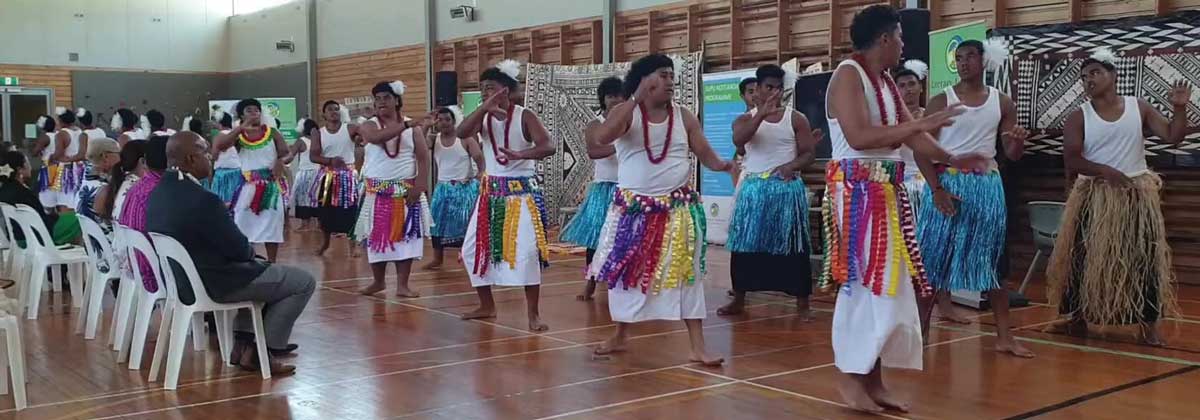
Manogi says that the introduction of the Tupu Aotearoa services for Pasifika was marked by a few ‘firsts’. “It was a first for Literacy Aotearoa Timaru to launch a programme that is focused solely on Pasifika; it was the first engagement with Pasifika communities by the new Tumuaki (CE) of Literacy Aotearoa, Claire McGowan; and it was a first for the new Navigator, Bale Serulaqeti Seniloli. She was only in the job a month before the launch, and she hit the ground running, connecting Pasifika communities and leaders and other stakeholders which led to a fantastic turn out and support for the launch.”
There was representation from a wide range of stakeholders including from Fiji, Samoa, Cook Islands, Tonga, Tuvalu, Tokelau, Kiribati and Niue, employment agencies, employers, secondary schools, ARA Institute of Technology, Multicultural Aoraki, Ministry for Pacific Peoples, MSD, Timaru Herald, churches and faith communities.
Manogi says that Literacy Aotearoa recognizes that they have a growing Pasifika community in Te Waipounamu or Te Waka a Māui, “We are thrilled to be part of their journey.”