
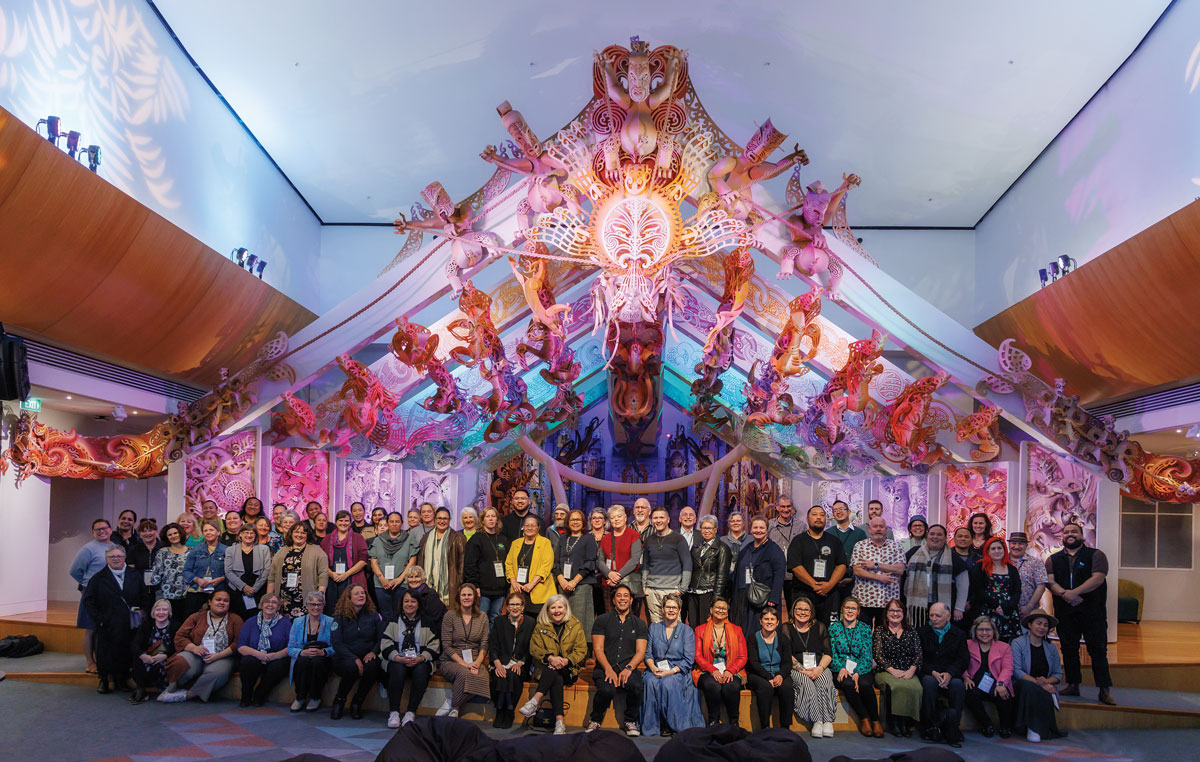
This year’s ACE Sector Conference theme, ‘Tuia te Kōrero, Whiria te Tangata – What is the Story?’ explored the importance and impact of stories, knowledge and wisdom and how they’ve been transferred and transmitted from the distant past (and our ancestors), as well as our own recent past to the present day. The imperative ‘tuia te kōrero’ describes the threads of stories that different people and perspectives bring together over time, and the verb ‘whiria’ refers to those threads weaving, plaiting and twisting together to become a strengthening bind.
The stories we hold in common are an important part of the ties that bind us together, while new stories help to form new relationships. Storytelling therefore forges connections between people and ideas, and telling stories is a powerful way that educators and people working in community can influence and inspire others. Great storytelling helps to build familiarity and trust, which in turn engages learners more fully and more effectively in the learning experience, far better than a PowerPoint or set of speaker notes. There is also evidence to show that learners retain information more effectively from educators who use effective storytelling.
The two days of spectacular speakers and workshops at the ACE Sector Conference didn’t disappoint, with keynote speakers weaving their own stories and experiences into their presentations. The theme provided a never-ending source of insights, updates and engagement. Everyone has a story to tell about their educational journey and the moments of insight that forged their learning pathway. This year’s master of ceremony and workshop facilitator, Te Ataahia Hurihanganui, has never been short of a story to tell.
Te Ataahia Hurihanganui – Rangitāne, Ngāti Kahungunuki-Wairarapa, Ngāti Ira, Ngāti Porou, Ngāti Tahu-Ngāti Whāoa, Tūhourangi, Ngāti Te Roro-o-te Rangi.
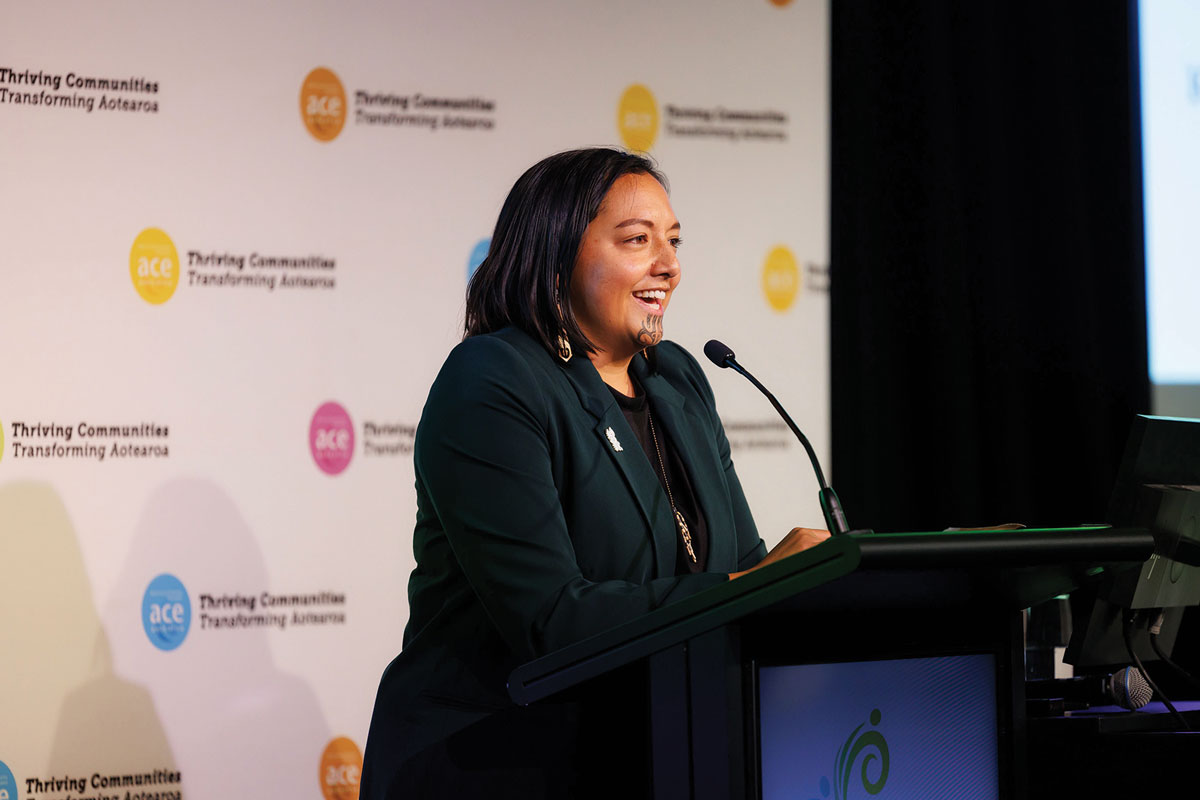 Te Ataahia, known by her colleagues and peers as Taahia, is a lifelong educator and the founder of Reo Rua Ltd, a Māori language education, training and consultancy provider – teaching, tutoring and facilitating learning within the ACE sector for more than 12 years. Taahia’s local teaching journey started at Wellington High School’s Community Education Centre where she tutored English as a Second Language while studying at university and raising her young family. As with many educators, Taahia has a constant thirst for learning and jumped at the chance to attend the ACE Hui Fono in 2017 as part of her professional development, which was the start of her longstanding ACE Aotearoa relationship.
“I absolutely thrived at Hui Fono and following that first engagement, I maintained my relationship with ACE, eventually joining the Board in 2019. Since then, I have regularly contracted to ACE for delivery of te reo and cultural capability training,” says Taahia.
Taahia is married to Davide Castorina, an Italian physiotherapist, and early in their marriage they made a commitment to split their time between Aotearoa and Sicily, which has afforded their trilingual children – son Mario Kapua, 8, and Māreikura Anna, 5, – multiple opportunities for their languages and cultural identities to flourish. When in Sicily, Taahia either teaches English to local preschoolers or continues her business contracts online. The advent and rapid development of digital technology has enabled her to continue working effectively and to pursue her passions, as it has made learning accessible to a wider group of people, wherever she is based.
“Being able to deliver training online is an absolute gamechanger for me. When I am overseas, I can continue with the delivery of my courses and during Covid this was a lifesaver. Online learning means that many people can access training that they would otherwise struggle to travel to. It makes it practical from both an economic and accessibility perspective… I love that I can be a devoted and ‘hands-on’ māmā while still being able to support learners regardless of where I am in the world.”
Taahia says the ACE world has taught her a lot over the years, but one of the most valued lessons has been the concept of ako, which reflects the process of being both a teacher and a learner simultaneously.
“I equally teach and learn, and therefore share in the process of knowledgetransfer which is so powerful!”
Her focus is on serving first, and spending time to connect and form relationships with the learners, hearing and respecting their stories, and creating that real sense of whanaungatanga, before working collaboratively to achieve something that inevitably impacts on everyone positively.
“For me, ACE epitomises the idea of community. It’s the ‘togetherness’ that deepens a sense of belonging within the individual learners and means that they return for more and spread the learning net. It’s a privilege to be part of this ongoing growth and teaching-learning experience.
“My focus on storytelling this year has had Māori oral traditions at its core, meaning I am both a descendant and an ancestor, so I must stop and consider how do my ancestors’ pasts and my own past inform my values, actions and behaviours today, and how can they impact upon the future, and that of my grandchildren’s? What key messages and learnings are there in those stories? What are the threads that connect them all? And then, what do I do with all that information? If storytelling is a powerful tool that helps us practise the skills of memory and retention, then which threads of my story do I choose to transfer and transmit to others, and why? And more importantly, how can I use them to better weave into the story-threads of my learners so that we can work more effectively together?”